
Why Magic Spells Fail (And What Most Spellcasters Are Never Told)
One of the most difficult moments on a magical path is not doubt — it’s confusion.
You followed the steps. You lit the candle. You spoke the words. You felt something shift… and then nothing happened. Or the outcome arrived warped. Or delayed. Or you were left with that hollow question that makes a practitioner quietly unravel: Why do my spells work sometimes, but not others?
If you’re here searching for why magic spells fail, let me offer you something kinder than superstition and more honest than hype: most spellwork does not fail because the universe is ignoring you. It fails because the spell was never fully aligned in the first place.
Magick is not a vending machine. It is a living conversation. And conversations break down when energy, intent, timing, emotion, and inner state are speaking different languages at once.
This guide is here to translate that breakdown into something you can actually work with. Not to shame you. Not to “sell you a miracle.” But to help you cast with clearer channels, fewer failures, and a steadier sense of trust in your own practice.
The Most Common Reason Magic Spells Fail: Fragmented Intention
Every effective spell has one thing at its core: a single, coherent intention.
Many practitioners sabotage their spellwork without realizing it by trying to accomplish too much at once. Love, money, confidence, healing, protection — all folded into one ritual because “if I’m doing the work, I may as well do it all.”
But spellwork doesn’t respond to efficiency. It responds to clarity.
Energy follows focus. When intention fragments, energy scatters. The spell may feel powerful in the moment of casting, yet fail to anchor in reality afterwards — like mist trying to hold a shape.
One spell. One outcome. This principle alone resolves more “failed spells” than any new ingredient ever could.
If your spells aren’t working, begin here: What is the one thing I am truly asking for? Not what you want in theory — what you want so clearly you can feel it settle into your chest like truth.
Why Focus and Discipline Matter More Than Words
Incantations are not spells. They are carriers.
The real force behind spellcasting is your ability to hold a mental, emotional, and energetic state steadily — without wavering.
If your mind drifts, your body tenses, doubt creeps in, or emotional turbulence rises mid-ritual, the current breaks. Not because you “did it wrong,” but because the channel became unstable.
This is why experienced practitioners often look calm and unhurried during spellwork. Discipline is not rigidity — it is containment.
If you’re newer to spellcasting, you’ll often build stronger results by working foundational skills first — focus, visualization, and emotional steadiness — rather than attempting highly complex rituals too early. A gentle starting point is a structured practice like easy spells for beginners, where the goal is consistency and alignment, not spectacle.
Spells don’t fail because you’re unworthy. They fail because the channel isn’t yet stable.

The Hidden Phases of Spell Development (Why “Failure” Often Means You’re Growing)
This is one of the truths spellcasters rarely say aloud: your practice evolves in stages.
When people search “why spells don’t work,” they often assume there’s one missing ingredient or one secret rule. But more often, the spell is fine — the practitioner is simply in a developmental phase where results are inconsistent by nature.
Here’s a grounded way to understand those phases:
Phase 1: Mechanical Casting
You follow steps carefully. You rely on instructions. Results are minimal or erratic because your energy is still learning to hold shape. This phase is not failure — it’s training.
Phase 2: Emotional Overdrive
You cast with intensity. You pour everything into the ritual — yearning, desperation, urgency. It feels powerful… but urgency can distort. In this phase, spells often “bounce” because the emotional frequency is louder than the intention.
Phase 3: Energetic Sensitivity
You begin noticing signs, patterns, synchronicities, vivid dreams, emotional clearing. External results may still be inconsistent, but the inner landscape is changing. Many people quit here because they expect instant outcomes, not transformation.
Phase 4: Coherence
You cast less often, but more precisely. You don’t need dozens of spells — you need the right one, cast cleanly. Results become steadier because you’ve learned containment, timing, and clarity.
If you’re in Phase 2 or 3, you may feel like your spells are failing. But often, you are simply becoming sensitive enough to feel the mechanics you used to miss.
Experience Gaps: When the Spell Is Sound but the Caster Is Still Learning
Another uncomfortable truth: some spells are not beginner spells.
Certain workings — especially those involving deep identity shifts, past-life recall, or long-held emotional bindings — require energetic literacy that comes through repetition and study.
Think of spellwork like a language. You wouldn’t attempt poetry before learning grammar — yet many people attempt advanced rituals without foundational fluency.
For example, a working like a simple past life spell can be profoundly effective, but it asks for inner steadiness and psychological readiness. If the nervous system is overloaded or the mind is scattered, the spell doesn’t “punish” you — it simply can’t land cleanly.
Match spell complexity to your current experience, and you’ll grow faster with fewer disappointments.
Energetic Leakage: Where Spell Power Goes When Results Don’t Appear
Sometimes spells don’t work not because you lacked power — but because you leaked it.
Energetic leakage is what happens when your spell is cast, but the energy that should nourish it is siphoned away through contradiction, overthinking, or external noise.
Common forms of leakage include:
- Over-explaining your spell to other people (inviting doubt, judgment, or unwanted attention)
- Obsessive checking for signs, timestamps, and proof (turning intention into anxiety)
- Recasting too quickly out of fear it “didn’t work” (interrupting the current before it settles)
- Emotional contradiction — wanting the outcome while simultaneously fearing it
- Seeking validation (“Was I doing it right?”) instead of anchoring your own authority
Containment is a kind of sacred silence. When you cast a spell, imagine you’re planting a seed. You do not dig it up every day to check if roots are forming.
If your spellwork feels inconsistent, reduce leakage before you change anything else.

Why Emotional State Can Completely Block Spell Results
Few people talk openly about this, but it matters deeply.
Spells cast from anxiety, desperation, anger, or fear often fail — not because emotions are “bad,” but because they distort the signal. Magick amplifies what already exists. If your internal state is chaotic, the spell magnifies that chaos rather than resolving it.
This is why cleansing, grounding, and preparation are not decorative extras — they are stabilizers. Even something simple like scent can anchor your nervous system. If you want a practical, ritual-safe way to stabilize your space, study how to work with aroma intentionally through using incense in rituals.
Before you cast, ask yourself:
- Am I casting from calm… or from panic?
- Do I trust this outcome… or am I trying to force it?
- Is my body settled… or braced?
Calm intention carries further than intense desire.
Timing, Resistance, and the Illusion of Failure
Not all spells fail. Some are delayed.
Spellwork interacts with existing momentum — personal, relational, and environmental. When resistance is high, manifestation takes longer.
Many practitioners declare failure simply because results didn’t appear within an imagined timeframe. If you want a grounded way to set time expectations, treat your spell like a goal: it needs an outcome, a path, and a timeframe that respects reality. The classic SMART criteria is not “magical,” but it is useful: specific, measurable, achievable, relevant, time-bound.
In spellwork, time-bounds are best held gently. Some workings unfold over days. Others take weeks. Some take months because the world must rearrange around you, and that rearrangement often happens in layers.
Instead of “Why didn’t it work?” ask: What is still rearranging?
When Spells “Fail” Because They’re Working on You First
This is the part most people don’t expect.
Sometimes the spell doesn’t move the external world immediately — it moves you. And until you shift, the external result cannot hold.
Here are common signs your spell is working internally first:
- Old emotions rise unexpectedly (clearing)
- Dreams intensify or become symbolic
- You feel pulled toward new habits, people, or choices
- Things that once felt “fine” suddenly feel misaligned
- You feel tested — not punished, but invited to choose differently
This is not failure. This is the spell touching the root system instead of the leaves.
For example, a spell for love may not bring a person immediately — but it may first reveal the parts of you that accept crumbs instead of devotion. A spell for abundance may not deliver money instantly — but it may first break your attachment to scarcity thinking.
Magick often begins by making you more honest.

Reiki Charged Herbal Love Pillar Candle
Ignite your intentions and attract love with this powerful herbal candle infused with Reiki energy
Product information
Product Review Score
4.33 out of 5 stars
16 reviewsProduct links
Environmental Interference: Casting Without Containment
Spellwork is sensitive to space.
Casting in a distracted environment — with interruptions, noise, or outside scrutiny — weakens containment. Privacy matters. Sacred space matters. Even temporary boundaries matter.
You don’t need an elaborate altar. You need intentional separation between the mundane and the magical.
If spells are cast casually, they often dissolve casually. If you treat your ritual as sacred time, it becomes sacred time.
Visualization Is Not Daydreaming — It’s Direction
Visualization is often misunderstood.
It isn’t fantasy. It’s rehearsal.
When used correctly, visualization programs expectation, emotion, and embodiment into a single coherent signal. The key is certainty — not excitement. The more “normal” the outcome feels in your body, the more believable it becomes to your deeper mind.
If your spells fail, it’s often because visualization was rushed, inconsistent, or emotionally disconnected.
Try this: instead of imagining a dramatic final scene, imagine the ordinary moment after the spell succeeds — the quiet relief, the stable feeling, the calm knowing. That ordinary moment is where reality lives.
How Experienced Practitioners Diagnose a “Failing” Spell
If your spell seems stalled or distorted, don’t rush to recast. Diagnose first.
Here are questions experienced spellcasters use to find the real issue:
- Was my intention singular? Or did I sneak multiple outcomes into one working?
- Was I emotionally coherent? Or did I cast from fear, urgency, or desperation?
- Did I leak energy afterwards? (overthinking, over-talking, checking, recasting)
- Is resistance present? (internal conflict, environmental barriers, complicated dynamics)
- Did I give it enough time? Or did I declare failure before the current settled?
Then choose one of three actions:
- Release: if the spell feels complete, stop interfering and let it unfold.
- Rework: if you find fragmentation or contradiction, refine intention and recast cleanly.
- Clear: if emotional debris or energetic noise is dominant, cleanse first. (A ritual designed specifically for removal and clearing can help, such as a remove something unwanted ritual.)
Most “failed spells” are simply spells that were never given a clean path to land.
What to Do When Your Spells Aren’t Working (A Simple Reset)
- Simplify your intention
- Stabilize your emotional state before casting
- Strengthen focus and containment
- Match spell complexity to your experience
- Reduce energetic leakage after the ritual
- Allow time for resistance to dissolve
Most importantly: stop treating “failure” as judgment.
Magic responds best to curiosity, not self-criticism.
Quick Spell Diagnosis Checklist
If a spell feels stalled, distorted, or ineffective, use this checklist before casting again. Experienced practitioners diagnose first — they don’t rush to repeat.
- Intention: Was my spell focused on one clear outcome, or did I blend multiple desires together?
- Emotional State: Did I cast from calm alignment, or from urgency, fear, or desperation?
- Focus: Was my attention steady throughout the ritual, or did my mind wander?
- Containment: Did I protect the spell afterwards, or did I leak energy through overthinking, talking, or constant checking?
- Timing: Have I allowed enough time for resistance and rearrangement to occur?
- Experience Match: Was this spell appropriate for my current level of practice?
If you answered “no” or “unsure” to more than one of these, the spell didn’t fail — it simply lacked alignment. Adjust the weak points before doing anything else.
A Gentle Next Step for Serious Practitioners
Many people reach a point where belief isn’t the issue — structure is.
That’s the moment when guided frameworks often outperform isolated spells. Not because you’re incapable — but because alignment becomes more important than effort.
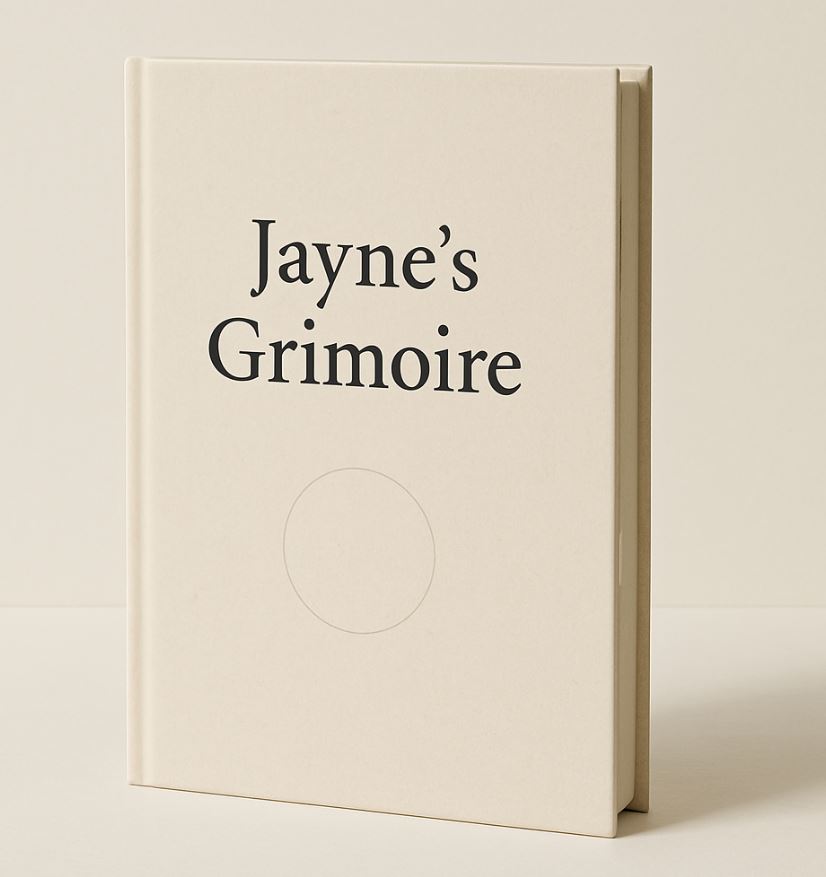
Jayne’s Grimoire was created for practitioners who already feel magick, but want clearer channels, fewer failures, and a deeper understanding of how spellwork unfolds over time. It isn’t about casting more spells — it’s about casting fewer, better ones.
If you’ve been asking “Why don’t my spells work?” this is usually what you’re really asking: How do I become consistent?
Consistency is not a personality trait. It’s a practiced kind of alignment.
Frequently Asked Questions
Why do my spells work sometimes but not others?
Inconsistent results usually indicate fluctuating focus, emotional state, timing, or environmental containment — not a lack of ability.
Can negative thoughts cancel a spell?
They don’t cancel it, but they can dilute or redirect the energy, especially if fear dominates the casting.
Should I repeat a spell if it fails?
Only after diagnosing intention, timing, and emotional alignment. Repeating without correction often compounds the problem.
How long should I wait before deciding a spell failed?
It depends on complexity and resistance. Many workings unfold over weeks or months, especially if deep patterns must shift first.
What’s the biggest mistake beginners make with spellcasting?
Trying to force outcomes through intensity rather than building clarity, containment, and steady intention.
Is it possible a spell “worked,” just not how I expected?
Yes. Sometimes the spell changes your path, removes obstacles, or shifts your inner state first — then the external result follows naturally.